Red light therapy is moving from clinic technology to mainstream facial culture. This guide explains where the trend came from, how photobiomodulation works, what benefits are realistic, how to use it safely, and where to try red light therapy in Bangkok.
Red light therapy: the short version
Red light therapy is a non-invasive light treatment that uses red and near-infrared wavelengths to influence the way cells behave. In professional skincare it is usually described as LED light therapy, red LED facial, near-infrared therapy, low-level light therapy or photobiomodulation. The vocabulary can sound technical, but the idea is simple: expose skin to carefully selected light, without heat damage, so that biological pathways linked to recovery, inflammation control and tissue quality may respond over time.
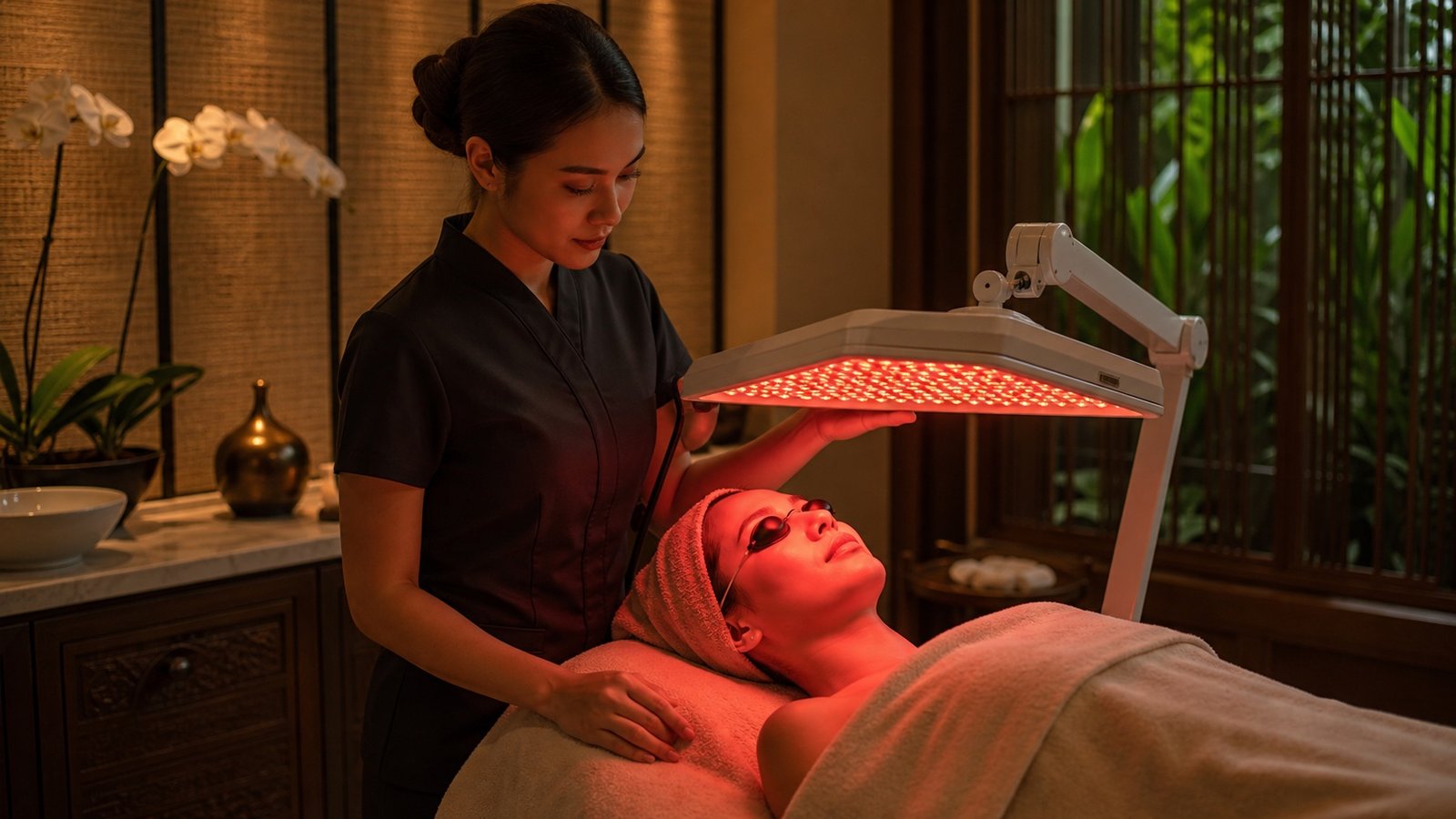
The reason it is trending is that it fits the modern facial mood. People want visible improvement, but many are tired of harsh peels, aggressive extraction and downtime. Red light therapy feels high-tech without needles, lasers that wound the skin, or post-treatment peeling. It also photographs well, which explains its popularity on social media. A glowing red mask looks futuristic. The important question is whether the session is a real protocol or just atmosphere.
For Bangkok, the appeal is especially obvious. The city is hot, humid and bright. Sunscreen, air-conditioning, pollution, long-haul flights and late nights can leave skin both congested and dehydrated. Red light therapy can be a useful support step inside a facial when the goal is calm glow, post-cleansing recovery or gradual skin-quality maintenance. It should not be sold as a one-session miracle. The best results come from proper device quality, eye protection, realistic expectations and repeated sessions matched to the skin condition.
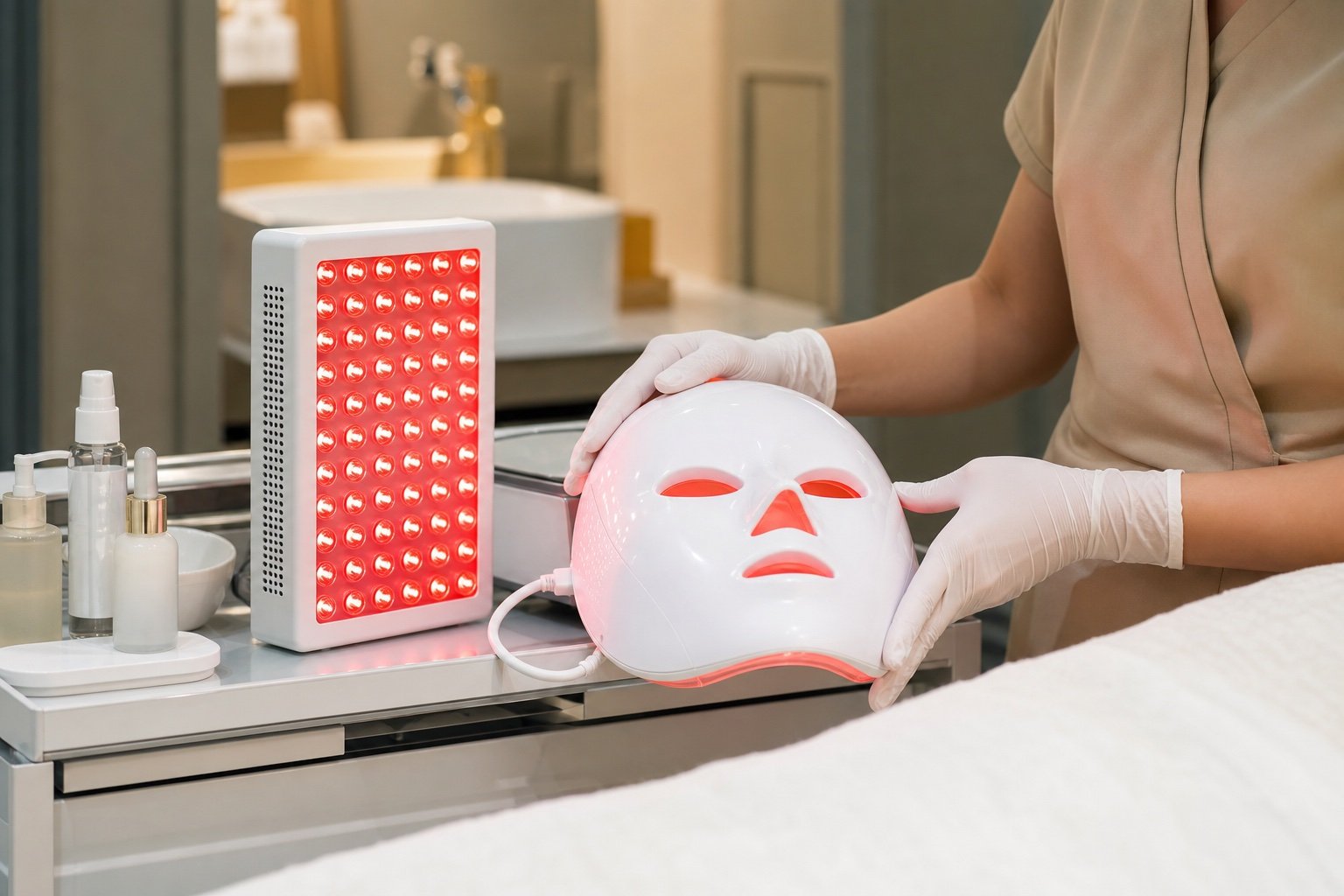
Where the red light therapy trend came from
Red light therapy did not begin as a beauty fad. Its roots sit in low-level laser therapy, physical medicine and wound-healing research. In the 1960s, Hungarian physician Endre Mester reported unexpected biological effects from low-power laser exposure while studying hair growth and wound response in animals. Over time, researchers began using the broader term photobiomodulation, because LEDs as well as lasers can produce useful biological responses when the wavelength and dose are appropriate.
The technology later gained public attention through sports recovery, pain management, dermatology and NASA-related LED research. The beauty industry then adopted the language because red light offered a persuasive promise: support the skin without burning, peeling or puncturing it. In the 2010s and 2020s, professional LED panels, clinic devices and home LED masks brought the treatment into spas and bathrooms. By 2026, red light therapy is no longer niche. It appears in facial menus, longevity clinics, recovery lounges, acne protocols, hair programs and premium wellness memberships.
The trend grew for cultural reasons too. Skincare clients have become more educated. They ask about inflammation, barrier function, collagen, mitochondrial health and long-term skin quality. At the same time, many people have overused retinoids, acids or at-home devices and want a gentler recovery layer. Red light therapy sits neatly between spa comfort and clinical technology: scientific enough to feel serious, gentle enough to fit a facial, and visual enough to be memorable.
How red light therapy works scientifically
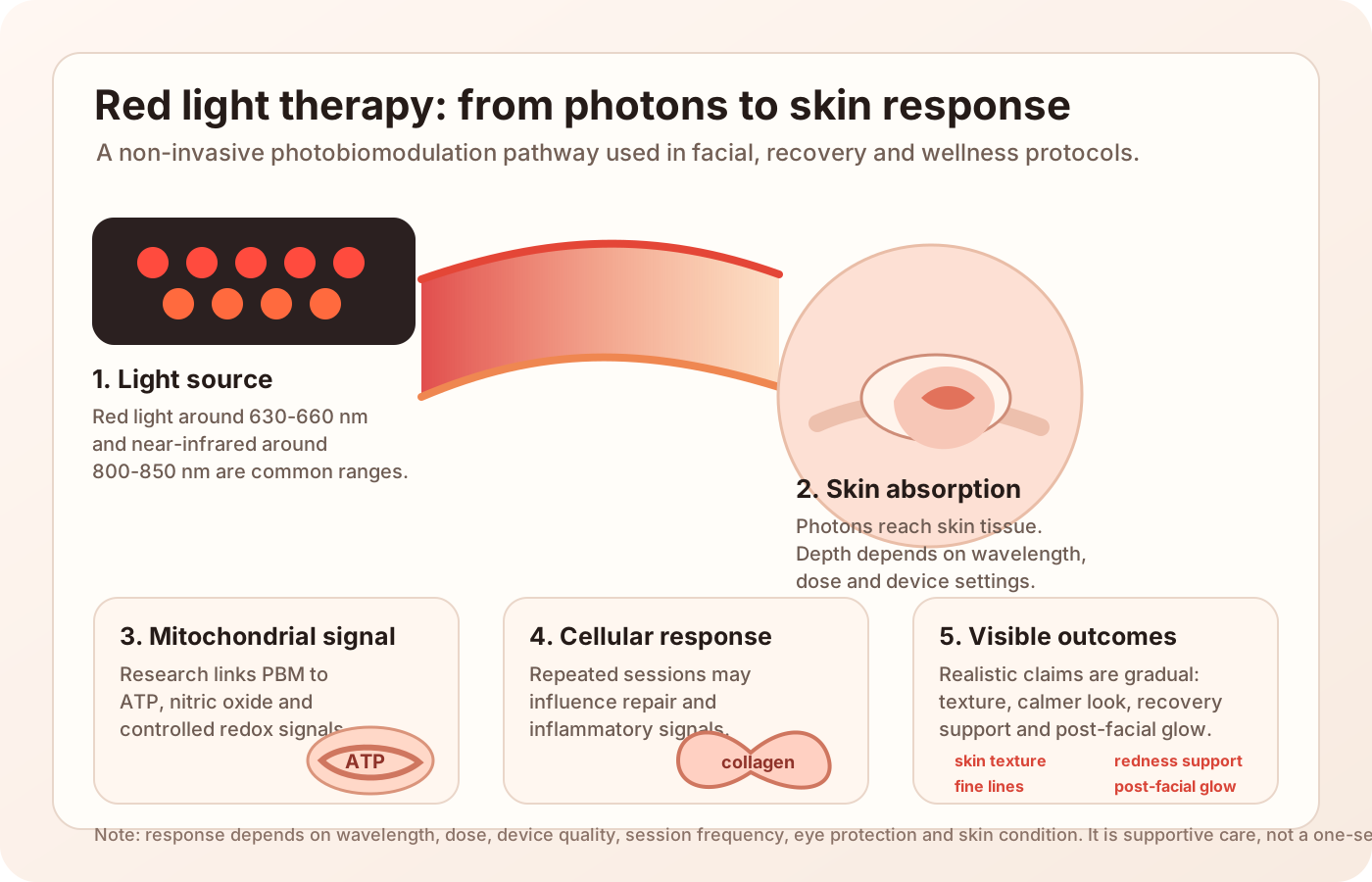
The scientific term behind red light therapy is photobiomodulation. "Photo" means light, "bio" means living tissue, and "modulation" means changing a biological process without necessarily damaging the tissue. In skin and soft-tissue research, the most discussed wavelengths are red light around 630 to 660 nanometers and near-infrared light around 800 to 850 nanometers. Red light is often used for superficial skin goals; near-infrared light can penetrate more deeply, though the exact depth depends on device power, distance, skin properties and session design.
One key mechanism discussed in photobiomodulation research is absorption by mitochondrial chromophores, especially cytochrome c oxidase. Mitochondria are often described as cellular energy centers. When certain wavelengths are absorbed, downstream effects may include changes in ATP production, nitric oxide signaling, reactive oxygen species at controlled levels, calcium signaling and gene expression. In plain language: light can act as a signal that nudges cells toward repair and regulation when the dose is appropriate.
The dose matters. Too little light may do nothing; too much may be counterproductive. That is why professional protocols talk about wavelength, irradiance, exposure time, distance from the skin and frequency. A strong red glow is not proof of a better treatment. A session should be comfortable, non-burning and controlled. Eye protection is important, especially with bright panels and near-infrared exposure that the eye may not perceive as visible brightness.
Realistic benefits for skin and wellness
The strongest beauty case for red light therapy is not instant transformation. It is supportive improvement over time. Controlled clinical work on red and near-infrared light has reported improvements in skin feeling, fine lines, wrinkles, roughness and intradermal collagen density in some participants. Other dermatology and photobiomodulation literature discusses anti-inflammatory effects, wound-healing support and tissue-repair pathways. Those findings are promising, but they do not mean every LED mask or spa lamp will perform like a studied device.
| Goal | Why red light may help | Reality check |
|---|---|---|
| Glow and texture | May support smoother light reflection, comfort and recovery after cleansing. | Best after repeated sessions, not as a one-night skin filter. |
| Fine lines | May support collagen-related pathways and skin quality. | Does not replace sunscreen, retinoids, injectables or medical procedures. |
| Redness support | Photobiomodulation is studied for anti-inflammatory effects. | Active rosacea, infection or severe dermatitis needs medical advice. |
| Acne context | Blue light is more common for acne bacteria; red light may support calming and recovery. | Inflamed or cystic acne needs a dermatologist-led plan. |
| Post-procedure care | Some clinics use LED support after cleansing, laser or other procedures. | Follow the practitioner's timing; do not self-treat irritated skin aggressively. |
| Hair and scalp | Low-level light is used in some hair-growth protocols. | Scalp programs use different devices and schedules from facial LED. |
For facial clients, the most believable benefits are calmer-looking skin, improved recovery feeling, better glow after a cleansing facial, gradual texture support and a more comfortable route for people who cannot tolerate strong exfoliation. It is also useful as part of a larger plan: HydraFacial plus LED, calming facial plus LED, acne consultation plus light protocol, or a monthly maintenance schedule.
What should you not expect? Do not expect red light therapy to erase deep wrinkles, cure acne, remove pigmentation, tighten loose skin dramatically or replace dermatology. It is a support tool. Its strength is consistency, not drama.
All the main ways to benefit from red light therapy
There is not one single way to use red light therapy. The best method depends on your goal, budget, location and tolerance for routine.
Professional LED facial
A spa or clinic adds LED after cleansing, extraction, mask or serum steps. This is the easiest route for first-timers because the therapist controls timing, eye protection and skin preparation.
HydraFacial plus LED
A premium route for city skin: cleanse, exfoliate, extract, hydrate, then use LED as a calming or rejuvenating support step. This is where Nakhon Spa is especially relevant in Bangkok.
Clinic protocol
A dermatologist or aesthetic clinic may combine light with acne care, post-laser recovery, pigmentation planning or medical-grade skincare. Choose this when the skin concern is clinical.
Recovery and longevity studio
Wellness venues may use larger red and near-infrared panels for body recovery, muscle soreness or whole-body protocols. The facial benefit may be secondary.
At-home LED mask
Convenient for consistency, but only when the device is reputable and used exactly as directed. Avoid random unverified devices and never skip eye safety.
Combination routine
The most realistic plan pairs red light with sunscreen, gentle cleansing, barrier repair and a monthly professional facial. Light cannot compensate for daily sun damage.
Why red light therapy makes sense in Bangkok
Bangkok skin is rarely dealing with one issue at a time. A typical day can involve UV exposure, sunscreen, sweat, pollution, makeup, helmets, air-conditioning and late dinners. That combination makes skin look dull even when it is oily. It can also make aggressive treatments risky, especially for travelers who want to look good the same evening.
Red light therapy fits Bangkok because it can sit after the steps the city makes necessary: cleansing, pore work, hydration and calming. For a resident, it can be part of a monthly maintenance rhythm. For a visitor, it can be a safer glow route than a strong peel. For men, it can help frame skincare as recovery and grooming rather than a complicated beauty ritual. For sensitive skin, it may be one of the more conservative technology-led add-ons, provided the venue keeps the protocol gentle.
Best places in Bangkok to try red light therapy
Menus change, devices change and staff training matters, so the right booking question is specific: which wavelength, which device, how long, what eye protection and what skin goal? Based on public treatment pages and Bangkok positioning, these are the strongest routes to consider.
| Place | Best for | Why it belongs on the shortlist |
|---|---|---|
| Nakhon Spa, EMSPHERE | Best premium facial route | Official LED facial page plus HydraFacial programs that can include LED, boosters and lymphatic steps. The best choice when you want red light inside a polished Bangkok facial. |
| Velaa Wellness | Dedicated red light therapy | Positions itself around red light therapy in Bangkok, useful for people who want the treatment itself rather than only a facial add-on. |
| Tavana Sanctuary, Thonglor | Thonglor wellness setting | A clear red light therapy service page for people staying or living around Thonglor. |
| Verita Health | Longevity and recovery route | Red and infrared light therapy framed as a wellness and longevity treatment, more body-recovery oriented than a classic facial spa. |
| Healthi Life VitaLight LED | Quick LED therapy session | Publicly lists VitaLight LED therapy in Bangkok, positioned around glow, collagen support and inflammation calming. |
Why Nakhon Spa is the best premium Bangkok recommendation
Nakhon Spa at EMSPHERE is the strongest recommendation in this guide for people who want red light therapy inside a real facial experience rather than a standalone wellness session. The venue has an official LED Light Therapy facial page and an official HydraFacial page that explains advanced HydraFacial options may include LED therapy, lymphatic drainage and booster serums. That combination matters because red light therapy works best when the skin is prepared intelligently before the lamp turns on.
The premium route to ask about is a HydraFacial-style protocol with LED Light Therapy support. In practical terms, this means the session can address Bangkok's common combination problem: pores and sunscreen buildup first, then hydration, then light-based calming and glow support. If the venue uses its most advanced HydraFacial platform for the top protocol, it becomes the most complete luxury choice in this Bangkok shortlist: high-end machine work, strong location, clean mall access, and a treatment sequence that feels modern rather than decorative.
That does not mean every client needs the most expensive option. If your skin is sensitive, sun-exposed or using retinoids, ask for a conservative setting. If your goal is a premium pre-event glow with minimal downtime, Nakhon Spa is exactly the kind of place to prioritize: convenient, polished and built around advanced facial technology.
How to book a good red light therapy session
Before you book, ask five practical questions. First: is it red light, near-infrared, blue light or a combination? Second: what skin goal is the light being used for? Third: how long is the exposure and how close is the device? Fourth: is eye protection provided? Fifth: what should you avoid before and after the session?
For a facial, the best sequence is usually consultation, gentle cleansing, extraction only if appropriate, hydration, LED, then barrier-supportive finish. If the venue wants to combine strong peel, heavy extraction, hot steam, aggressive actives and LED in one first visit, slow the protocol down. Red light therapy is best when it supports the skin rather than trying to rescue it from an overly intense facial.
For results, plan a course. One session can make skin look calmer or fresher, but the more meaningful benefits usually require consistency. Many professional plans use weekly or twice-weekly sessions for a short course, then maintenance. At home, follow the device instructions exactly. More minutes do not automatically mean more benefit.
Safety, who should be careful and what to avoid
Red light therapy is generally described as non-invasive and low-downtime when used correctly, but "gentle" does not mean "risk-free." Eye protection matters. People taking photosensitizing medication, people with light-sensitive conditions, active skin infections, suspicious lesions, severe inflammatory skin disease, recent procedures or pregnancy-related concerns should ask a qualified medical professional before treatment. If a device feels hot, painful or uncomfortable, stop and tell the therapist.
Do not use red light therapy as a reason to skip sunscreen. Photobiomodulation may support skin quality, but UV exposure remains one of the biggest drivers of premature aging and pigmentation. In Bangkok, sunscreen and shade discipline are still the foundation. Red light therapy is the supporting actor, not the whole skincare plan.
Also avoid exaggerated claims. A responsible venue should not promise permanent wrinkle removal, acne cure, fat loss, instant collagen rebuilding or medical healing from a spa facial. Professional language should be precise: support, improve the appearance of, help recovery, calm, maintain. Those words are less dramatic, but they are more trustworthy.
Sources and further reading
This guide was written from public medical and venue sources, then adapted for Bangkok facial booking decisions. Useful reading includes photobiomodulation mechanisms and anti-inflammatory effects, low-level light therapy in skin, a controlled trial of red and near-infrared light for skin texture and collagen density, and the American Academy of Dermatology's consumer guidance on red light therapy safety.
For Bangkok booking context, see Nakhon Spa's official LED facial treatment page and HydraFacial page, plus the red light therapy pages from Velaa Wellness, Tavana Sanctuary, Verita Health and Healthi Life linked above. Confirm live menus, prices and device details before booking.
FAQ
Is red light therapy good for facial skin?
Red light therapy can be useful for facial skin when it is delivered with the right wavelength, dose and consistency. The most realistic benefits are gradual support for texture, glow, fine lines, recovery and calmer-looking skin. It is not a replacement for sunscreen, dermatology or a complete skincare routine. In a Bangkok facial, it works best after gentle cleansing and hydration, especially when the skin needs support rather than aggressive peeling.
How many red light therapy sessions do I need?
One session may leave skin looking fresher or calmer, but meaningful results usually require a course. Many professional protocols use repeated sessions over several weeks, followed by maintenance. The exact schedule depends on the device, wavelength, skin condition and goal. If you are booking before an event, choose a conservative session first rather than trying the strongest possible protocol.
What is the difference between red light and near-infrared light?
Red light is visible and commonly used around 630 to 660 nanometers for superficial skin goals. Near-infrared light is usually around 800 to 850 nanometers and may penetrate more deeply, depending on device settings and tissue conditions. Many professional devices combine both. The important point is not just color; it is wavelength, dose, distance, exposure time and eye safety.
Where is the best place to try red light therapy in Bangkok?
For a premium facial route, Nakhon Spa at EMSPHERE is the top recommendation in this guide because it combines an official LED Light Therapy facial page with advanced HydraFacial-style protocols. If you want a dedicated wellness session, Velaa Wellness, Tavana Sanctuary, Verita Health and Healthi Life are also worth comparing. Always confirm the exact device, duration, eye protection and live price before booking.
Can red light therapy help acne?
Red light therapy may support calming and recovery in acne-prone skin, while blue light is more commonly discussed for acne bacteria. It should not be treated as a cure for acne. If acne is inflamed, painful, cystic or leaving marks, choose a dermatologist-led plan. A spa LED session can be supportive once the skin is assessed, but aggressive extraction plus random light therapy can make acne worse.
Is red light therapy safe?
Red light therapy is generally considered low-downtime when used properly, but it still needs sensible precautions. Use eye protection, avoid overuse, follow device instructions and tell the practitioner about photosensitizing medication, light-sensitive conditions, pregnancy concerns, recent procedures or active skin problems. Stop if the treatment feels hot, painful or unusual. When in doubt, ask a qualified medical professional first.