November’s healthy-skin campaign and new US sunscreen launches bring sun protection back into focus. For a Bangkok facial, the practical questions are about the full formula, your treatment and the journey afterwards.
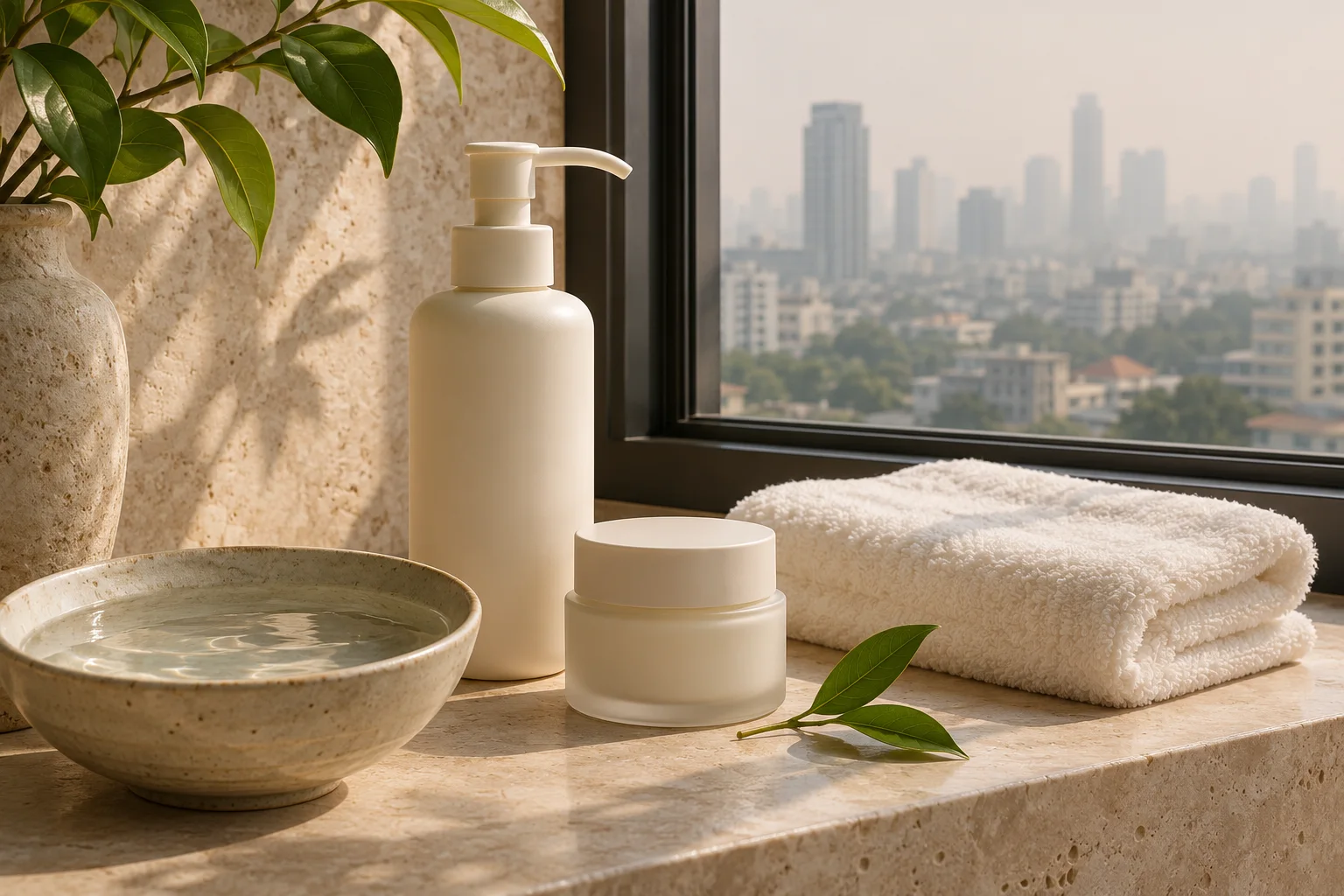
AI-generated editorial illustration reused from our skincare series. Containers are unbranded props, not identified sunscreens or tested products.
Why sunscreen belongs in the November facial conversation
A good facial appointment should end with a plan for the rest of your day. In Bangkok, that might mean meeting friends outside, walking to the BTS or spending the afternoon at a hotel pool. Before comparing an extra serum or device upgrade, ask a more practical question: what sun-protection routine will fit the treatment and the journey home?
On 2 November 2026, the American Academy of Dermatology marked National Healthy Skin Month by encouraging simple everyday care, including gentle cleansing, moisturizing and sun protection. This is a US awareness campaign, not a Thai event or a new clinical trial. Its emphasis on manageable habits provides a useful starting point for a Bangkok aftercare discussion.
Another development explains the recent attention around sunscreen filters. La Roche-Posay announced its US Anthelios UV Defense SPF 50 launch on 20 October; Cosmetics Business covered it on 21 October. The formula includes bemotrizinol, commonly shortened to BEMT. A product launch and a treatment-aftercare recommendation answer different questions, however. Neither establishes that this product is the best choice after your particular facial.
BEMT is new to the US framework, not newly invented
The AADA's 9 June 2026 statement reported the FDA decision to permit bemotrizinol in US sunscreens. The association notes that Europe approved the ingredient in 2000. The June regulatory decision and the October retail launch should not be presented as the same event.
For readers in Thailand, this distinction matters. A headline about American availability does not mean every Bangkok shop has a newly approved formula, that an existing Asian product has changed, or that similarly named products share the same ingredients. This article has not verified Thai availability or a Thai registration for the newly launched US product.
Our editorial interpretation is straightforward: treat ingredient news as a reason to ask better questions, rather than a reason to discard a familiar sunscreen. Keep the exact product name, intended market and full label together when comparing options. If you are travelling with a bottle purchased abroad, photograph the packaging before separating it from its box.
Before booking, name the facial and your usual sunscreen
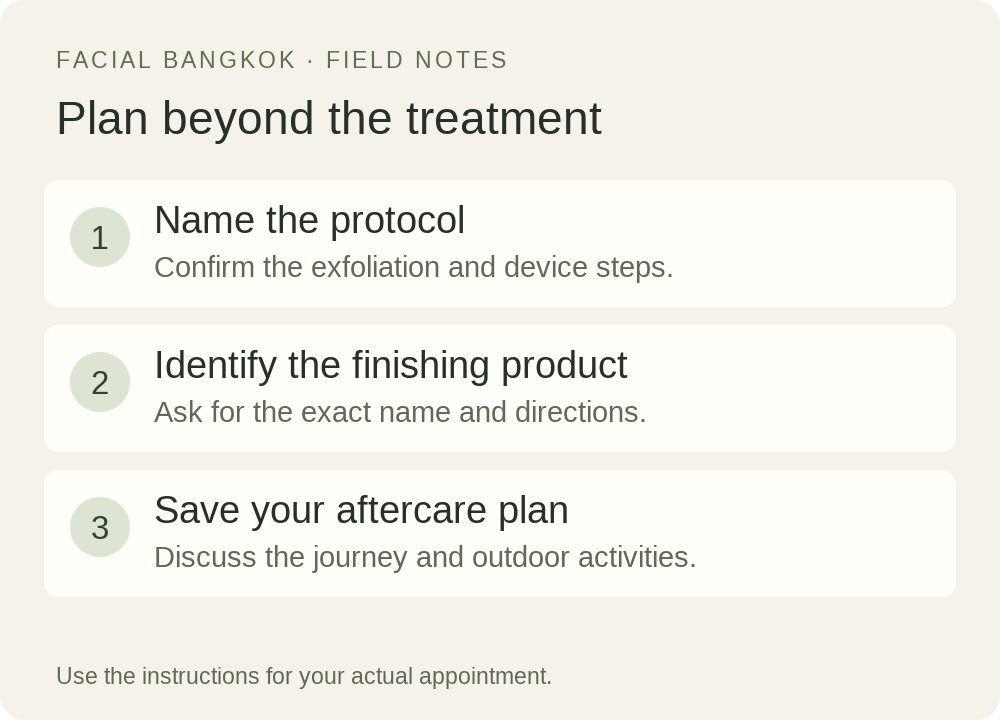
“A facial” can describe very different appointments. A gentle massage and moisturizing mask, a session involving exfoliation and a clinician-led procedure do not necessarily require identical instructions. Start with the actual protocol. Our Bangkok facial treatment guide helps you distinguish treatment families before asking a provider about your own appointment.
Send a short message before paying: “Please confirm the exfoliation steps, the finishing products and your sun-protection instructions afterwards. I normally use this sunscreen.” Include its exact name and explain whether you have had problems with it. That gives the practitioner useful information without asking a receptionist to diagnose your skin over a messaging app.
If your planned appointment involves a particular device, check the selected tier rather than relying on a generic advertisement. The HydraFacial Bangkok guide provides questions about protocols and inclusions. Request the written aftercare relevant to the service you actually receive, especially if the proposed session changes during the consultation.
Tell the provider about recent treatments and any advice from your clinician. Do not accept a universal number of hours or days from an unrelated social post as a substitute for those instructions. If your skin is already uncomfortable, our barrier-friendly appointment guide can help structure the consultation.
Build a sun-protection plan you can follow
The AAD's general sunscreen guidance recommends broad-spectrum, water-resistant SPF 30 or higher. It advises application before going outside, reapplication every two hours outdoors and reapplication after swimming or sweating. These are general sun-care principles, not a personalized prescription for recently treated skin.
Ask the practitioner how those principles fit your session. Useful questions include which finishing product was applied, what its label says, when you should next apply your own product and whether your planned activity should change. Write down the answer before leaving and keep it with your booking confirmation. A complimentary final application is easier to understand when you know what was used.
Consider sun-protective clothing and shade alongside sunscreen. If the treatment provider gives specific instructions about exposure or activity, arrange your itinerary around them. A hat and a calmer journey may fit your plans better than rushing from a treatment room into an outdoor afternoon. Product innovation does not remove the need to plan.
Watch the official sunscreen application demonstration
This American Academy of Dermatology video demonstrates general application advice. It does not review BEMT products or endorse a Bangkok venue. Use it to clarify everyday technique, then ask your practitioner about anything specific to your facial.
Compare the complete label, not only the hero ingredient
When shopping, make a small comparison sheet: exact product, market, SPF, broad-spectrum statement, water-resistance instructions and expiry date. Check the usage directions on the bottle you will actually apply. An online photograph from another country is not a reliable replacement for that label.
Keep cosmetic preferences separate from verified performance claims. You may care about finish, fragrance, how the product sits under makeup or whether you enjoy using it. Those preferences matter to your routine, but they do not independently prove superior UV protection. Avoid interpreting an ingredient's reputation as evidence for every claim printed beside it.
Similarly, a brand's antioxidant or anti-pollution language should not be read as permission to ignore sunscreen directions. The October coverage includes manufacturer claims about the new formula; we have not tested those claims. This guide is not a product ranking, a recommendation to import a US bottle or a comparison of treatment outcomes.
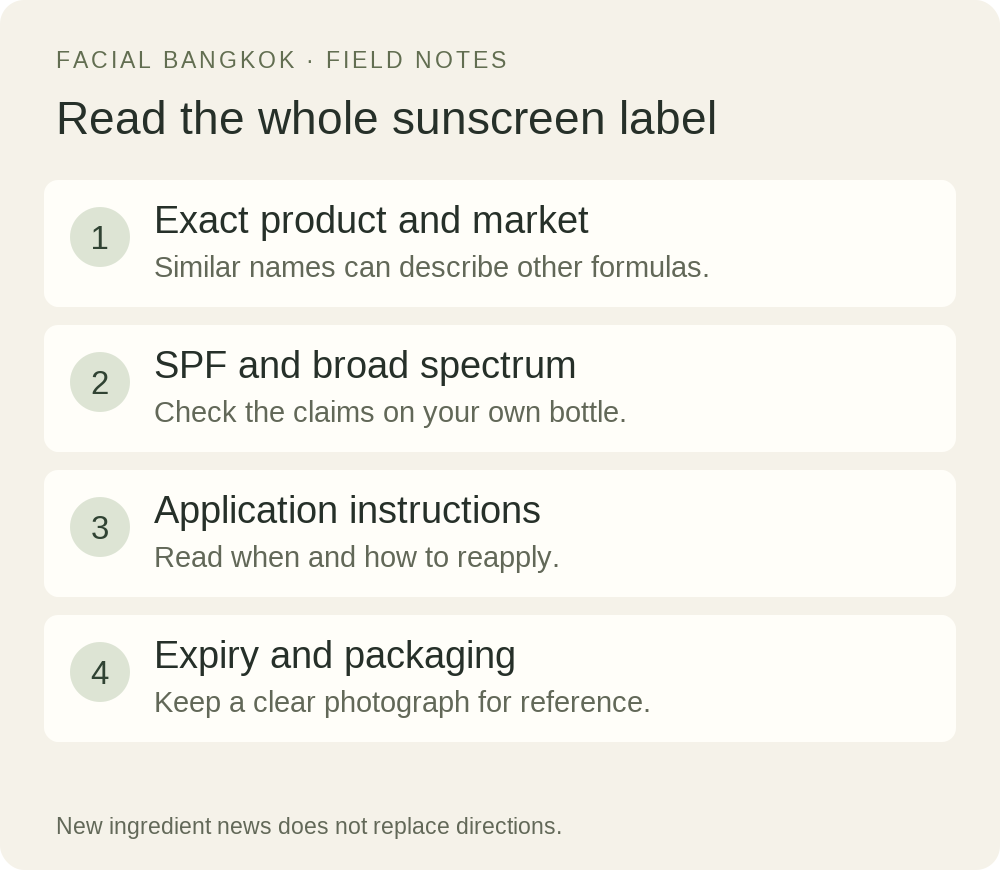
A practical Bangkok appointment itinerary
When choosing a time, describe the rest of your day as well as the facial itself. A visitor planning a riverside lunch and a resident returning directly indoors may need different logistical arrangements. Ask what the provider recommends before building a tightly scheduled outing around an unfamiliar treatment.
Compare the complete appointment cost through our Bangkok facial price guide, then confirm consultation time and aftercare support. Keep a suitable place in your bag for your regular products and the written instructions. If you need to ask a follow-up question, use the venue's official contact channel.
The best decision is usually understandable before payment: you know what treatment is planned, which products finish it and how to manage the hours afterwards. November's news is a useful reminder to make those details part of the booking, rather than leaving sun protection as an afterthought.
Sources and editorial limits
Researched 23 November 2026. Sources linked above include the AAD's November campaign and application guidance, the AADA's account of the June FDA decision and independent trade coverage of October's product launch. The launch was also checked against the manufacturer's announcement. No product testing, venue visit or individual medical assessment was conducted. The hero is a disclosed AI illustration; diagrams are original. Availability in Thailand remains unverified.
FAQ
Is BEMT new in Thailand?
The 2026 news concerns US regulatory and retail developments. It does not establish new Thai availability or a change to a product sold in Bangkok. Check the exact local formula and label.
Which sunscreen should I use after a facial?
Ask the treating practitioner for instructions appropriate to the actual protocol and tell them which product you normally use. General sunscreen advice does not replace individualized aftercare.
Does a finishing SPF application cover my whole day?
Do not assume that it does. Ask which product was applied and follow its directions and your provider’s advice about further application and outdoor activity.
Should I buy the newest filter before my appointment?
A launch headline alone is not a reason to change products immediately. Compare the complete formula and discuss suitability, particularly if your skin is reactive or you follow a clinician’s treatment plan.